Documentation burden
Clinicians spend significant time after each visit reconstructing what was said into a usable note.
Inoo transforms clinician-patient conversations into structured findings and a clinician-reviewed note while preserving the evidence behind what was documented.
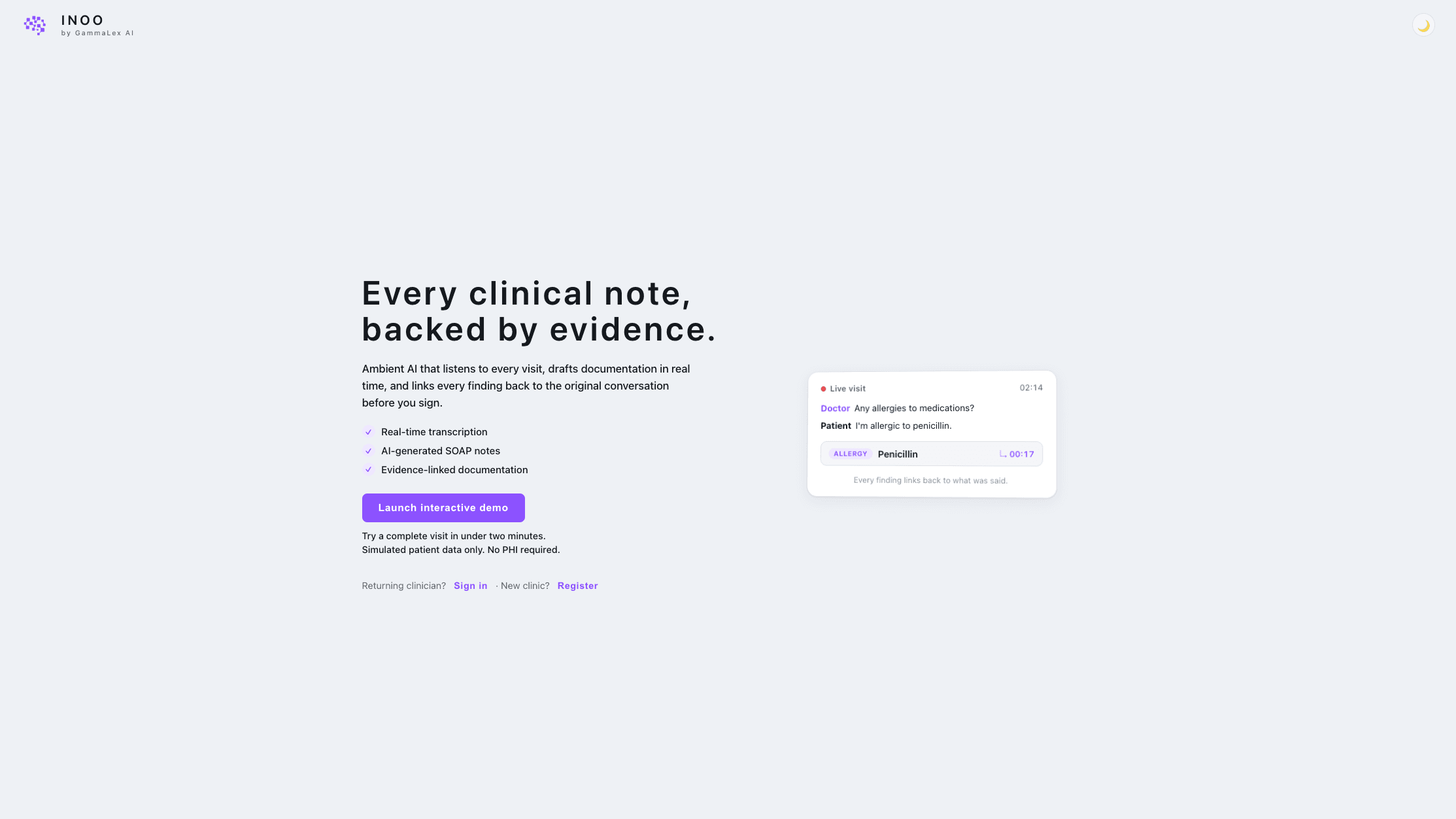
CLINICAL EVIDENCE INFRASTRUCTURE
Inoo applies GammaLex evidence infrastructure to clinical documentation, ambient capture, structured findings, clinician review, and preserved provenance at inoo.gammalex.com.
Ambient clinical intelligence should reduce documentation burden without erasing accountability. Every finding that enters the note should remain inspectable.
Clinicians spend significant time after each visit reconstructing what was said into a usable note.
Typing during the encounter pulls focus away from the patient and fragments the clinical conversation.
A raw transcript captures speech. A clinical note requires structured findings, narrative judgment, and human review.
Generated documentation cannot stand alone. Clinicians must inspect, correct, and approve what enters the record.
When a finding appears in a note, teams need to see what was said, when it was said, and how the documentation was produced.
Clinical documentation must remain inspectable after the encounter ends, not locked inside a disposable session.
From live capture to structured findings, source quotes, and clinician-approved notes, from the Inoo product at inoo.gammalex.com.
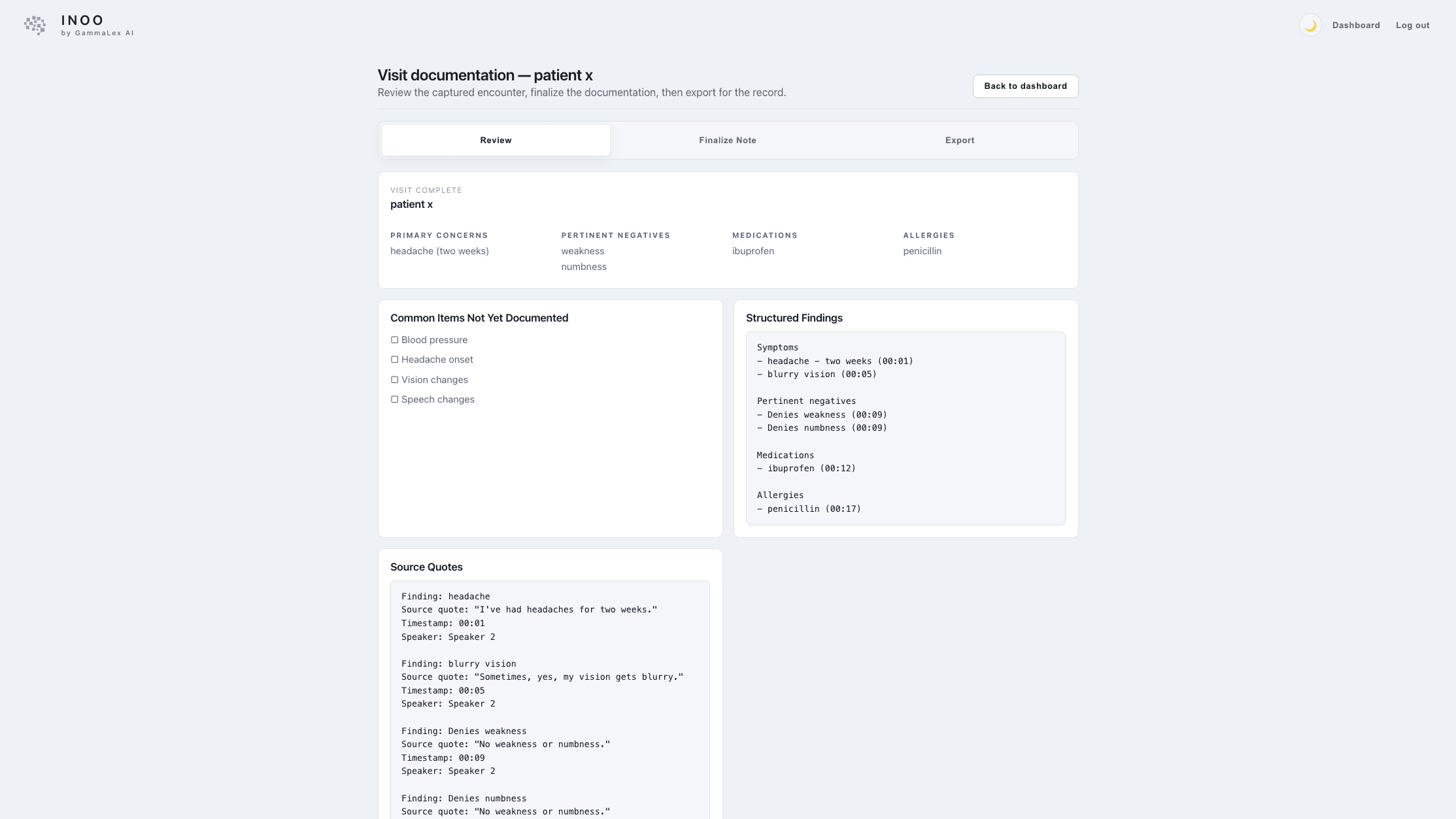
Inoo applies GammaLex evidence infrastructure to clinical documentation, so ambient capture becomes structured findings, a clinician-reviewed note, and preserved provenance.
Step 1
Inoo listens ambiently during the visit so the clinician can stay present with the patient.
Step 2
Speech becomes a durable transcript that can be reviewed alongside later documentation steps.
Step 3
Symptoms, medications, allergies, and other clinical items are organized as structured findings with timestamps.
Step 4
Inoo drafts narrative documentation from the encounter so review starts from a complete first pass.
Step 5
Human oversight remains required. The clinician inspects findings, edits as needed, and finalizes the note.
Step 6
Source quotes, timestamps, and transcript lineage remain linked to the documented findings.
Capture clinician-patient conversations without forcing documentation into the middle of the visit.
Turn conversational evidence into reviewable clinical items with clear categories and timestamps.
Keep human judgment at the center. Drafts support the workflow; clinicians approve the record.
Link findings back to source quotes and transcript moments so documentation remains inspectable.
Produce a draft clinical note from the encounter so clinicians start from structured context, not a blank page.
Maintain provenance across transcription, findings, draft note, and clinician approval.
Dali applies GammaLex evidence infrastructure to legal work. Inoo applies the same evidence-centered approach to clinical documentation.